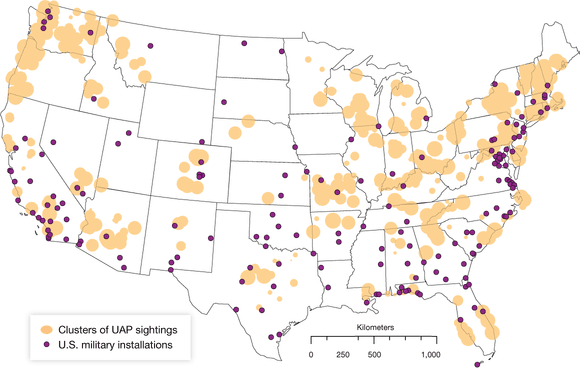
Local and state government officials, the Federal Aviation Administration, and the U.S. Department of Defense should conduct outreach with civilians living near military operations areas and notify them when there will be airspace activity. Understanding that military operations are being conducted nearby could reduce the likelihood that members of the public will report military aircraft as UAPs. An evaluation should be conducted to shape the design of a detailed and robust system to collect public reports of UAP sightings. Mobile devices, GPS, and artificial intelligence could be leveraged to collect images, audio recordings, and descriptions of sightings. Technological advances are making it cheaper and easier for civilians, private companies, civilian government agencies, and foreign actors to access and deploy ever-smaller aerial devices (such as drones and surveillance balloons). Given these trends, public reporting of aerial phenomena could help government authorities rule out hoaxes and misidentifications—and stay focused on potential threats in U.S. airspace, such as surveillance aircraft from China or terrorist attacks via drones. |