|
|
For more than a decade, policymakers have debated how best to balance veterans’ health care within the VA and in the community. RAND has regularly made evidence-based contributions to this ongoing discussion, and we continue to do so this month with a new report on how proposed policy changes would affect veterans in New York. Learn more about this research—and how previous RAND work continues to inform the community that supports veterans—below. We hope this newsletter contains valuable information, and encourage you to share it with others who are interested in veterans’ well-being and the policies that support them. If someone forwarded this to you, please subscribe to stay up to date on RAND’s veteran-focused research, important veteran-related policy developments, and public discussions. Information about our published and ongoing work, as well as how to collaborate with us, is available at veterans.rand.org. Warmly, |
Carrie M. Farmer and Rajeev Ramchand |
Co-directors, RAND Epstein Family Veterans Policy Research Institute |
|
|
|
|
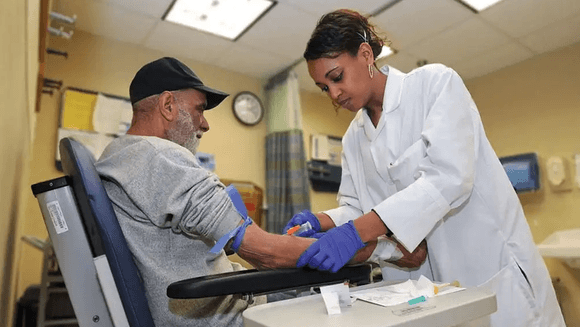
How Could Expanded Eligibility for Community Care Affect New York Veterans’ Access to and Quality of Health Care?
|
|
|
|
|
|
|
The U.S. Department of Veterans Affairs (VA) provides health care to about 9 million veterans each year, including more than 300,000 in New York. While the VA traditionally delivers care through its own facilities, the VA Community Care program enables eligible veterans to receive VA-funded care from private-sector providers. Proposed policy changes aim to expand Community Care eligibility by relaxing or eliminating current standards for drive time, wait time, and service availability. Our analysis assesses how these changes could affect veterans' access to and quality of care in New York. An annex summarizes the proposed policy changes, methodology, and supporting data, and a research brief captures the highlights. |
Report
|
|
|
|
|
Research Brief
|
|
|
|
|
Annex
|
|
|
|
|
|
|
When Does Military-to-Civilian Transition Fall Short?
|
|
|
 Photo by Riska/Getty Images | | |
|
|
Many federal agencies and nonprofit organizations support military service members transitioning back to civilian life. However, veterans still report that many of their transitioning needs are not being met. Studies assessing the needs of veterans during the transition process largely rely on homogeneous samples that lack the diverse gender, racial, and ethnic identities found among current and future populations of veterans. Researchers from RAND and the University of Southern California examined potential gaps in transition supports and the challenges veterans face when transitioning out of the military. Oversampling women and racial and ethnic minority veterans, the researchers interviewed 50 post-9/11 veterans and found that the challenges they face stem from a lack of information about available resources and the cost of living. |
Report
|
|
|
|
|
|
|
Federal Updates
|
|
|
On April 18, the President signed the executive order, “Accelerating Medical Treatments for Serious Mental Illness,” which aims to expand and expedite research on the potential therapeutic benefits of psychedelics (specifically psilocybin, ibogaine, LSDA, and MDMA) for individuals with certain mental health conditions. It also directs the Food and Drug Administration to support new clinical trials and collaborate with the Department of Health and Human Services, VA, and the private sector to share data and increase clinical trial participation. |
Recently Introduced Legislation
|
- H.R. 7735 would require the VA-DOD Joint Executive Committee to conduct an inventory of all mental health programs across the transition pathway and to evaluate each program’s effectiveness.
- S. 4031 would designate certain VA medical facilities as “innovative therapies centers of excellence.”
- S. 3988 would direct VA to offer annual preventive health evaluations to those with spinal cord injuries or disorders.
|
Veterans Affairs
|
On April 21, the House Appropriations Committee unanimously passed the FY2027 Military Construction, Veterans Affairs, and Related Agencies Appropriations Bill. The bill would fully fund VA through the end of FY2027 and now goes to the full House for a final vote. The key areas for investment in FY2027 include |
- preventing veteran suicide
- delivering quality, timely, and convenient access to health care
- ending veteran homelessness
- establishing the Warrior Independence and Self-Sufficiency Ethos Office
- accelerating implementation of the Electronic Health Record Modernization
- investing in VA facilities.
|
On March 11, VA and the Department of Justice (DOJ) signed a memorandum of understanding that grants DOJ the authority to appoint VA attorneys as special assistant U.S. attorneys. This would allow the attorneys to participate in court proceedings on behalf of a veteran who is unable to make their own health care decisions. |
VA recently announced two sets of community-based grants for organizations serving veterans: |
- The Highly Rural Transportation Grant makes $7 million in grants available for state veteran service agencies and veteran service organizations (VSOs) that provide transportation services to rural veterans.
- The Adaptive Sports Grant makes $16 million in grants available for national, regional and community-based organizations that provide adaptive sports programs for disabled veterans and service members.
|
|
|
|
|
Expert Views from the RAND Epstein Family Veterans Policy Research Institute
|
|
|
|
|
|
|
|
|
Webinar: Expanded Eligibility for VA Community Care
|
|
|
 Photo by andresr/Getty Images | | |
|
|
Thursday, May 7, 1 – 2 p.m. PT / 4 – 5 p.m. ET |
At our next RAND Epstein Family Veterans Policy Research Institute webinar, subject-matter experts will discuss proposed changes to expand eligibility for the VA Community Care program and how those changes might affect veterans’ access to and quality of health care. This event will be open to the public, with advance registration required. Those who register will receive Zoom connection details via email. |
|
|
|
|
|