From the Directors
|
Even as we, like many of you, enjoyed some summer downtime, the RAND Epstein Family Veterans Policy Research Institute continued to advance veterans policy research, producing new reports and engaging in discussions about important issues. With cooler weather on the horizon and many heading back to school, we hope you’re inspired to learn more about veterans’ health coverage, suicide prevention efforts, and possible connections between military exposures and mental health conditions. Please share this newsletter with friends and colleagues who are also interested in veterans’ well-being and policies that support them. Everyone who is interested is welcome to subscribe so they can stay up-to-date on RAND’s veteran-focused research, important veteran-related policy developments, and public discussions. Information about our published and ongoing work and how to collaborate with us is available at veterans.rand.org. Wishing you a wonderful autumn, |
Carrie M. Farmer and Rajeev Ramchand |
Co-directors, RAND Epstein Family Veterans Policy Research Institute |
|
|
|
|
Most VHA Patients Have Other Sources of Health Care Coverage. Why Is This—and Who Pays?
|
|
|
 Photo by brizmaker/Adobe Stock | | |
|
|
Of the U.S. veterans who are enrolled with the Veterans Health Administration (VHA), 84 percent also have other sources of health care coverage. Veterans may be eligible for more than one form of health care coverage or multiple ways to access free or low-cost care. Having multiple ways to get coverage and seek care can offer veterans greater choice and coverage. But it can also lead to confusion on the part of patients, providers and institutions providing care, and those paying for care (i.e., private or government-sponsored insurers) about which source pays for—or should pay for—specific services. In this perspective, RAND economist Erin Taylor describes which veterans are eligible to enroll in VHA and how the U.S. Department of Veterans Affairs health care system provides services. She discusses the prevalence of insurance coverage among veterans enrolled in VHA, where veterans with other sources of health care coverage receive health care, and who pays for it. Finally, Taylor discusses situations in which overpayments for care and coverage might arise and concludes with three future directions for research and policy options that may help reduce potential overpayments for care and coverage. See our federal updates below to learn about how VA is taking steps in partnership with the Centers for Medicare & Medicaid Services (CMS) to address some of these issues. In a RAND Epstein Family Veterans Policy Research Institute webinar, we brought together researchers and expert panelists from industry to discuss important questions about the health and well-being of older veterans who are also enrolled in Medicare, double payments, and ways to enhance coordination between VHA and Medicare to increase efficiency and effectiveness. |
Read the perspective
|
|
|
|
|
Watch the webinar
|
|
|
|
|
|
|
What Are the Mental, Behavioral, and Neurologic Health Outcomes Among Post-9/11 Veterans with Military Exposures?
|
|
|
 Photo by Bobboz/Getty Images | | |
|
|
Military personnel who are often exposed to a variety of hazards while deployed have expressed concerns that mental, behavioral, and neurologic health issues may arise from these exposures. The U.S. Department of Veterans Affairs, in accordance with the PACT Act, requested that the National Academies convene a committee of experts to assess possible relationships between exposures experienced during military service and mental, behavioral, and neurologic health conditions and chronic multi-symptom illness among veterans deployed to Southwest Asia or Afghanistan after September 11, 2001. RAND Epstein Family Veterans Policy Research Institute Co-director, Rajeev Ramchand, was one of the experts who served on this committee. Their resulting report offers conclusions regarding possible risk-conferring relationships between nine categories of exposures and health outcomes, including depression, anxiety, and dementia. Our October 16 webinar will feature a discussion of this report. See below for details. |
Learn more
|
|
|
|
|
|
|
What Strategies Should Be Prioritized in Veteran Suicide Prevention?
|
|
|
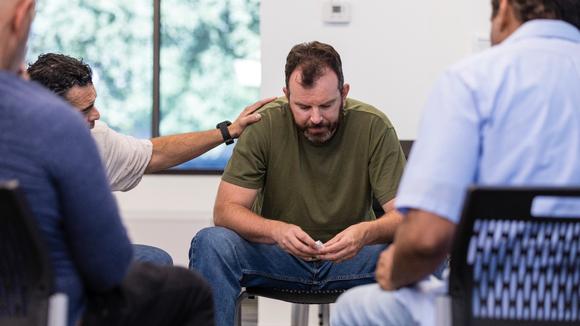 Photo by SDI Productions/Getty Images | | |
|
|
In a recent landscape analysis, RAND researchers took stock of existing and emerging efforts in the United States to make a dent in the suicide epidemic plaguing veterans. In response to feedback on some of the authors’ recommendations in that report, two of the authors delved more deeply into the reasoning behind prioritizing evidence-based strategies and laid out a vision for how novel efforts could be integrated into a holistic approach to prevention. |
|
|
Learn more
|
|
|
|
|
|
|
Federal Updates
|
|
|
Congress
|
- Prior to the August recess, the Senate confirmed two additional nominees to their positions at VA: Undersecretary for Memorial Affairs Sam Brown and Inspector General Cheryl Mason.
- Before leaving for recess, the Senate also passed the first set of its appropriations bills, including the FY2026 MilCon-VA appropriations bill, which differs from the House-passed version of the bill. One of the biggest differences is that the Senate bill would only temporarily codify standards for seeking community care based on drive time or wait time, while the House version would permanently codify these provisions (as seen in the ACCESS Act). These differences must be resolved prior to final passage.
- Congress returned to Capitol Hill on September 2 following its August recess, facing multiple action items. Federal government funding runs out on September 30 unless Congress passes all twelve appropriations bills or a continuing resolution, which would avoid a full or partial government shutdown. It is unclear what path will be taken. They also must pass the National Defense Authorization Act for FY2026 and the Senate needs to continue moving forward with nominations.
|
|
|
Veterans Affairs
|
- VA announced it terminated union contracts for a majority of the department’s employees.
- VA has decommissioned 29 information technology (IT) systems since January 2025 and has reduced other IT systems and contracts to save money and boost effectiveness.
- Over 230 organizations across the country received more than $818 million in grant awards to help homeless veterans or veterans at risk of becoming homeless.
- VA announced that it partnered with CMS through a data matching agreement to review medical bills, send bills to providers, and recover overpayments or duplicative payments.
|
|
|
|
|
Expert Views from the RAND Epstein Family Veterans Policy Research Institute
|
|
|
- A Buffalo News opinion piece cited RAND research on how few private providers meet readiness standards for effectively serving veterans.
- Ross Dickman, CEO of Hire Heroes, mentioned RAND's work on military to civilian transition in his testimony at the June 25 House Committee on Veterans Affairs (HVAC) hearing titled, "Strengthening the Transition Assistance Program: Exploring Outcomes to Improve the Transition to Civilian Life."
- Actor Bradley Cooper cited RAND research in the PBS documentary, Caregiving.
- Yahoo Finance cited RAND research in the article, “Veterans' unemployment is rising. Blame federal layoffs.”
- The Military.com opinion piece, “The New VA Budget Pushes to Privatize Care, Risking the Veterans Health System," included information from a RAND perspective.
- Dr. Meaghan Mobbs, director of Center for American Safety and Security Independent Women’s Forum, cited the same piece in her written statement for the HVAC Health Subcommittee hearing on VA Community Care, which led to discussion about the report during the hearing.
- The Guardian mentioned RAND research in its article, “US veterans agency lost thousands of ‘core’ medical staff under Trump, records show.”
- Military Times covered the new RAND release in the article, “VA needs more oversight of health care options to prevent waste: Study.”
- The Stars & Stripes op-ed, “Education for active military, veterans and the nation: A national imperative,” mentioned RAND research.
- The Forbes piece, “From A Mission To A Movement: Advancing Support For America’s Military And Veteran Caregivers," mentioned RAND research.
|
|
|
|
|
Upcoming Event
|
|
|
Webinar on Military Exposures and Mental Health Outcomes
|
October 16, 1 – 2 p.m. PT / 4 – 5 p.m. ET |
At our next RAND Epstein Family Veterans Policy Research Institute webinar, subject-matter experts will discuss mental, behavioral, and neurologic health outcomes among post-9/11 veterans with military exposures. This event will be open to the public, with advance registration required. Those who register will receive Zoom connection details via email. Watch for the invitation in your inbox in the coming weeks. |
|
|
|


