In Focus: Private Military Contractors

Prepared by the RAND Corporation | December 2020

Members of the Wagner Group pose for a photo circa 2018 in Syria.  Photo courtesy of the Security Service of Ukraine.

Members of the Wagner Group in Syria circa 2018
(photo courtesy of the Security Service of Ukraine)

This newsletter captures a selection of open source material on malign activities by Private Military Contractors (PMCs). The International Committee of the Red Cross defines PMCs as private businesses providing military and security services. These services include armed guarding, maintenance and operation of weapons systems, prisoner detention, and advice or training to local forces or security personnel. In the context of this newsletter, malign activities are those activities undertaken by a PMC which are illegal, destabilizing, or escalatory. The RAND Corporation gathers this open source material with the support of U.S. government foreign assistance funding.

Near East (Middle East and North Africa) | Africa (Sub-Sahara) | Europe and Eurasia |
East Asia and the Pacific | Western Hemisphere

Feature

image alt

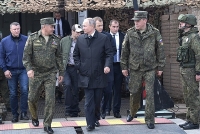
Russian Federation president Vladimir Putin (Wikimedia Commons image)

Where's Wagner? The All-New Exploits of Russia's "Private" Military Company

09/16/2020 | PONARS Eurasia

The policy memo from PONARS Eurasia discusses the Wagner Group's new activities since Fall 2019, "highlighting their use by the Russian state, their repeated failures, and their human rights abuses." The policy memo also highlights how the organization has built up its forces by recruiting in countries like Syria, dispelling the image that the group is comprised of Russia's best fighters.

Near East (Middle East and North Africa)

Syrians Make Up Turkey's Proxy Army in Nagorno-Karabakh

10/05/2020 | Foreign Policy

Turkish-backed Syrian National Army (SNA) mercenaries are fighting in the Nagorno-Karabakh conflict, supporting Azerbaijan. Since the end of September, around 1,500 Syrians have been deployed to Nagorno-Karabakh. SNA mercenaries were told that they would man guard posts along border demarcation lines but have instead been involved in direct fighting with little support from Azerbaijani regular forces, leading to the deaths of 55 Syrians.

Wagner-Affiliated Telegram Channel Trolls Nagorno-Karabakh Conflict Analysts

10/07/2020 | Bellingcat

As reports of Russian fighters in Nagorno-Karabakh increase, a Russian Telegram channel connected to Maksim Fomin, a former fighter in the Donbas conflict, is publishing information which seems to imply the presence of Russian PMCs in region. However, the information published by the Reverse Side of the Medal Telegram channel is actually an elaborate effort to troll people trying to connect Russian PMCs to the Nagorno-Karabakh conflict. Analysis of the images published by the channel which imply the presence of Russian PMCs in Nagorno-Karabkh show that the images are not from Nagorno-Karabakh. The first image published showed a Russian Il-96 transport airplane travelling to the January meeting of the Eurasian Economic Union, and the second image published is actually of Syria, not Nagorno-Karabakh.

St. Petersburg Court Rejects Defamation Lawsuit Against News Outlet that Linked Russian Mercenary to Gruesome Execution in Syria

10/19/2020 | Meduza

A St. Petersburg court rejected a defamation lawsuit against the Russian news outlet Fontanka. The lawsuit, filed by a man in Byransk, claimed that Fontanka falsely identified the plaintiff as one of the Russian mercenaries who executed, dismembered, and burned a Syrian deserter in 2017. The case was coordinated by the Patriot media group, which is allegedly controlled by Evgeny Prigozhin, the alleged owner of the Wagner Group, the private military contractor responsible for the torture and killing of the Syrian deserter.

Analysis: Russia and Turkey Keep Powder Dry in Nagorno-Karabakh Conflict

11/09/2020 | Reuters

While Russian private military contractors have been involved in the Nagorno-Karabakh conflict, Russia has been reticent to become actively involveed in the conflict between Armenia and Azerbaijan. According to Alexander Borodai, a former leader of pro-Russian separatists in eastern Ukraine, a handful of Russian fighters, mostly of Armenia descent, have gone to Armenia but have not stayed in Nagorno-Karabakh.

Russia Now Has a Position in Libya. What Next?

11/23/2020 | Foreign Policy Research Institute

Russia has used Libyan warlord Khalifa Haftar to project power in North Africa, allowing Russian firms to solidify energy deals in eastern Libya and opening the possibility of Russia gaining a naval port in Benghazi. Turkish intervention, which was fuelled by concerns over Wagner's presence in Libya, has prevented Haftar from taking over Tripoli, but Haftar remains in control of eastern Libya, allowing Russia to maintain an active presence in the region. Russian presence in Libya has allowed Russia to extend influence to other countries in the Sahel, including Mali, Sudan, and the Central African Republic (CAR). Russia has used Wagner Group mercenaries to prop up regimes within the CAR and Sudan and gain access to natural resource rights, a model that it will most likely use in Mali. Russian presence in Libya and the possibility of a Russian port in Benghazi will also allow Russia to expand its influence in the Mediterranean.

The Role of Russian Private Military Contractors in Africa

08/20/2020 | FPRI

Russia has used a loophole in international law which allows for the use of private military contractors to provide local assistance in order to spread influence abroad. First, a host country provides Russia with access to its ports or airfields. Then, the two countries agree that Russia will provide local assistance, allowing for the legal use of PMCs in that host country. The Russian navy or air force then visit, solidifying official Russian presence. Russia has repeated this pattern in Libya, Sudan, the Central African Republic, and Madagascar. Once Russia has established ties with the nation, it seeks access to natural resources present in the nation. Much of the revenue from these resources is funneled back to companies owned by Evgeny Prigozhin who is the head of the Wagner Group and tied to Putin's inner circle.

Russian Attack Jets Back Mercenaries Fighting in Libya

09/13/2020 | New York Times

Russian fighter jets have been conducting combat support missions in Libya to support Russia's mercenary forces. The fighters include MiG-29s and Su-24s. The fighters are reportedly being flown by mercenaries. Two MiG-29s have crashed so far in Libya. Russia has also supplied mercenaries with Pantsir systems.

Waves of Russian and Emirati Flights Fuel War in Libya

09/04/2020 | New York Times

Russia and the United Arab Emirates have been breaking the UN arms embargo in Libya by supplying arms to Libyan strongman Khalifa Haftar. Investigators counted 339 Rusisan military flights between November 1, 2019 and July 31, 2020, the majority of which came from Russia's Khmeimim Air Base in Syria. The flights supported Russian Wagner Group mercenaries operating in Libya, who have been critical in supporting Haftar.

Exploiting Chaos: Russia and Libya

09/23/2020 | CSIS

Russia's interest in Libya is tied to its grand strategy to establish a multi-polar world and cement Russia's status as a great power. Involvement in Libya also provides Russia with a foothold in the Mediterranean region and North Africa. While Russia uses a whole of government approach to project power, it primarily uses a mixture of hard power tools, including PMCs, in Libya.

Erdogan Nurtures Elite Mercenary Force to Rival Russia's Wagner Group

09/12/2020 | The Telegraph

An AFRICOM report published in September stated that Turkey has sent 5,000 Syrian mercenaries to Libya to support the Government of National Accord. The Syrian mercenaries are with Turkey's Sadat Group, which claims that it does not have any fighters in Libya. The Sadat Group was started by Adnan Tanriverdi, a close confidant to Turkish President Recep Tayyip Erdogan, in 2012, and critics of Erdogan claim that the group functions as Erdogan's private army. The Sadat Group claims to be a private military company that aims to provide security in the Islamic World.

AFRICOM Says 7,000 Syrian Fighters in Libya

09/03/2020 | Jane's

According to AFRICOM, Russia and Turkey have both sponsored Syrian fighters in Libya. Approximately 2,000 Syrian fighters sponsored by Russia are fighting for the LNA in Libya. 5,000 Syrian fighters, backed by Turkish private military company Sadat, are fighting for the GNA in Libya. AFRICOM stated that the fighters are inexperienced and motivatec by the promise of money. The report states that many of the fighters have turned to theft and sexual assault, causing tension with local populations.

Libya Analysis: 35 Monthly Military Trips in Support of Wagner Group

09/11/2020 | Middle East Monitor

The United Nations has tracked roughly 70 flights over 2 months of military cargo to Haftar's forces. The story notes that Russia may be seeking to establish a permanent presence in Libya.

PMC Wagner Fighters in Libya Number 1200

09/09/2020 | Lenta.Ru

According to experts at the UN, the number of PMC Wagner fighters in Libya increased in May of this year from 800 to 1,200. Wagner fighters are supporting Field Marshall Khalifa Haftar. The UN also reported that Russia has transferred at least two types of military equipment to Libya: MiG-29 fighters, which are located at the Al Jufra Air Base, and Su-24 attack aircraft, which are located at Al Jufra and Al Kadim Air Bases. At the beginning of July, Wagner fighters were located at five air basesÑAl Jufra, Brak al Shati, Gardabia, Sabha, and WaddenÑand at the Al Sharara oil field, which is the largest oil field in Libya.

How Russia Tried to Weaponize Charlie Sheen

09/23/2020 | Foreign Policy

Via a website for paid celebrity videos, Charlie Sheen, among other celebrities, gave messages of support to a Russian imprisoned in Libya for meddling in its election. The individual, Maxim Shugaley, was accused of working with Yevgeny Prigozhin throughout the African continent to influence elections and grow Russia's influence.

How Putin's Favorite Mercenaries Are Using Secretive Operations to Tip the Balance in Africa

09/09/2020 | Business Insider

Russia is using Wagner Group to expand its influence in Africa and counter U.S. and Chinese influence in the region. The Wagner Group has increased its support of the LNA and Field Marshall Haftar, providing additional aircraft and fighters. Russia's use of the Wagner Group to support authoritarian regimes in Africa allows Russia to expand its influence in the content through gray zone actions. However, Russian actions on the continent have beeen largely unsuccessful.

Russia Steps Up Support for Private Military Contractor in Libya: U.N. Report

09/02/2020 | Reuters

Russia has stepped up its logistic support for private miiltary contractor Wagner Group in Libya with 338 military cargo flights from Syria to Libya in the past nine months. The UN report states that Russia has violated the UN arms embargo in Libya and that Russia's support of the Wagner Group in Libya has significanlty increased during 2020.

Africa (Sub-Sahara)

A Dangerous Narrative Surrounds Russia's Presence in the Central African Republic

11/22/2020 | National Interest

International reporting on the conflict in the Central African Republic (CAR) has largely focused on Russian PMC activity in the CAR, which ignores many of the underlying political tensions within the country. The conflict in CAR began in 2013 when the anti-government and largely Muslim Seleka rebel alliance led a coup against the Christian-dominated government. Much of the conflict has focused on which economic and religious sectors in CAR will control the country, but the lack of international interest in the ongoing conflict created opportunities for Russian intervention in the conflict. Originally, Russian PMC presence in CAR and its training of CAR's military was well received by the citizens of CAR as armed conflict has prevented economic development in the country. Furthermore, Russia was judged positively against the negative perceptions of CAR's former colonizer, France. However, perceptions of Russia are less positive as the conflict continues, and many people in CAR tie their approva of the Russians with their approval of current president Touadera's administration rather than concrete actions that the Russians have taken.

The Military-First Approach in Northern Mozambique Is Bound to Fail

11/23/2020 | Council on Foreign Relations

Efforts to use military and private military companies (PMCs) to stabilize Mozambique's northern border, which is under threat from an Islamist insurgency led by Ansar al-Sunna (ASWJ), have failed. In September 2019, the Russian PMC Wagner Group was deployed to Cabo Delgado, Mozambique's worst-affected province and the site of its largest investment. However, Wagner Group mercenaries were evacuated in November 2019 after sustaining losses. South African PMC Dyck Advisory Group (DAG) remains deployed in Cabo Delgado but has been unable to stop the insurgency. Human rights violations by security forces and the Mozambique military have strengthened support for ASWJ in Mozambique.

Russian Private Military Contractors in Sub-Saharan Africa: Strengths, Limitations and Implications

09/13/2020 | IFRI

Russia uses a combination of legitimate and illegitimate facets of military-technical cooperation in Africa. Russia has leveraged military aid win return for mining rights and energy partnerships with its African client states. Russian PMCs rose from a tradition of Russian use of non-state actors to enforce its control over domestic and foreign populations and rose to prominence following Russia's involvement in Ukraine and Syria. Russian PMCs have not been effective at fighting against technologically superior actors. However, by using PMCs. Russia has maintained some degree of plausible deniability for actions in Africa. Furthermore, Russia has been able to use PMC forces to function as shockwave troops and decrease involvement and potential embarrassment of regular Russian forces. The article explores case studies in the CAR, Sudan and Mozambique.

The Role of Russian Private Military Contractors in Africa

08/20/2020 | FPRI

Russia has used a loophole in international law which allows for the use of private military contractors to provide local assistance in order to spread influence abroad. First, a host country provides Russia with access to its ports or airfields. Then, the two countries agree that Russia will provide local assistance, allowing for the legal use of PMCs in that host country. The Russian navy or air force then visit, solidifying official Russian presence. Russia has repeated this pattern in Libya, Sudan, the Central African Republic, and Madagascar. Once Russia has established ties with the nation, it seeks access to natural resources present in the nation. Much of the revenue from these resources is funneled back to companies owned by Evgeny Prigozhin who is the head of the Wagner Group and tied to Putin's inner circle.

Treasury Increases Pressure on Russian Financier

09/23/2020 | U.S. Treasury

The U.S. Department of the Treasury's Office of Foreign Asset Control (OFAC) placed additional sanctions on entities in the Central African Republic (CAR) associated with Yevgeny Prigozhin. Prigozhin is tied to the Internet Research Agency (IRA) and the private military company Wagner Group. The Wagner Group has been involved in conflicts in Ukraine, Syria, Sudan, Libya, and Mozambique. The treasury placed sanctions on the following entities and people associated with Prigozhin's activities in CAR: M-Finans, Lobaye Invest, Dmitrii Sergeevich Sytii, Yevgenii Khodotov, and Aleksandr Yurievich Kuzin.

Europe and Eurasia

Nobody Needs Another Prigozhin: 'Putin's Chef' Reeportedly Wants to Expand His Political Influence and Maybe Even Win a Seat in Russia's Parliament

10/22/2020 | Meduza

According to sources close to the Putin administration, Evgeny Prigozhin, the Russian oligarch connected with the Wagner Group PMC and Russian internet trolls, is attempting to expand his political influence by backing the Rodina Party ticket for the Russian State Duma. When asked by Meduza's reporters whether he was attempting to enter into Russian politics, Prigozhin responded that he was not interested in either becoming a Duma member or providing political backing to those wishing to become Duma members.

Putin's Chef' Prigozhin Files $200k Defamation Suit against Liberal Russian Journalists Who Claimed He Has Criminal History

11/20/2020 | RT

Evgeny Prigozhin, the businessman tied with the Wagner Group PMC, has reportedly filed a defamation case against three Russian journalists who made claims that Prigozhin had a criminal background. The complaint was filed over an interview with Maxim Shevchenko, a TV presenter and the head of the Communist Party faction in the Vladimir Region legislative assembly, published by the news outlet Dovod. Shevchenko commented on several criminal allegations against Prigozhin, including Prigozhin's connection to a school food poisoning scandel and Prigozhin's alleged felony convictions for crimes including prostitution.

Not So Private Military and Security Companies: Wagner Group and Russian Prosecution of Great Power Politics

09/25/2020 | CSIS

The policy memo from PONARS Eurasia discusses the Wagner Group's new activities since Fall 2019, "highlighting their use by the Russian state, their repeated failures, and their human rights abuses." In particular, the Wagner Group’s actions in Mozambique, Libya, Belarus, and Syria are discussed. The policy memo also highlights how the organization has built up its forces by recruiting in countries like Syria, dispelling the image that the group is comprised of Russia's best fighters.

In Belarus, Russian Mercenaries Turned from Sabotuers to Friends

09/21/2020 | New York Times

32 members of the Wagner Group were arrested at a health resort in Belarus at the end of July. Following their arrest, Belarussian investigators stated that the Wagner Group members had been in Belarus to interfer with the upcoming presidential elections. Belarussian authorities then claimed that the Russians were the victims of an elaborate plot engineered by the Ukrainian secret service and the United States. Following increased unrest due to the contested presidential elections, Belarussian President Aleksandr Lukashenko released the mercenaries in an attempt to garner support from Russia for the regime.

Band of Brothers: The Wagner Group and the Russian State

09/21/2020 | CSIS

The Russian government has found Wagner and other private military companies to be useful as a way to extend its influence overseas without the visibility and intrusiveness of state military forces. As a result, Wagner should be considered a proxy organization of the Russian state rather than a private company selling services on the open market. While technically illegal in Russia, the Russian government uses PMCs to operate as proxies abroad. Furthermore, PMCs provide Russia with plausible deniability in actions abroad and allows the state to underreport casualties as PMC deaths are not included in official casualty numbers, increasing domestic support for actions abroad.

Turkey and Russia Preside over a New Age of Mercenary Wars

09/30/2020 | The Washington Post

This article discusses the proliferation of states - principally Turkey and Russia - funneling mercenaries into conflicts throughout the world. In the context of the recent Armenia-Azerbaijan flare-up, the article reports the use of Turkish-recruited Syrian mercenaries who are fighting in support of Azerbaijan (it has been alleged that two Syrians have died within the last few days of fighting). Discussion of the Russian Wagner Group contextualizes the mercanary narrative as something larger than just Turkey, but there is no newsworthy reporting on recent Wagner Group developments.

Three Criminal Proceedings Opened in Case of Wagner PMC Members - Venediktova

09/15/2020 | Interfax

Ukrainian Prosecutor General Iryna Venediktova announced three criminal proceedings in a case involving the Wagner Group. On July 29, 33 members of the Wagner Group were detained near Minsk, Belarus. The Wagner Group members are accused of taking place in hostilities backed by Russia in the territories of Donetsk and Luhansk.

East Asia and the Pacific

The Footprint of Chinese Private Security Companies in Africa

03/01/2020 | China Africa Research Initiative

Chinese private security companies (PSCs) have grown in recent years, increasing their footprint in Africa. International expansion of Chinese PSCs followed the establishment of the Belt and Road Initiative (BRI) in 2013 which drove demand for security services abroad to protect Chinese nationals and corporations. Chinese PSCs have faced several challenges, including cutthroat domestic competition which lowers corporate revenue, increased enforcement of labor laws which drive up corporate costs, and laws which severely restrict the usage of weapons abroad. In Africa, Chinese PSCs are faced with issues associated with lack of training and language and cultural barriers. Chinese PSCs are increasingly active in maritime security as the number of instances of piracy off the coasts of Africa increase, and, unlike PSCs involved in ground operations, Chinese PSCs involved in maritime security are specially licensed to carry arms. Two major Chinese PSCs, HXZA and Haiwei, are involved in maritime security operations in Africa.

Chinese Private Security Contractors: New Trends and Future Prospects

05/15/2020 | Jamestown Foundation

As Chinese investments abroad grow through the Belt and Road Initiative (BRI), China has expanded its use of private security companies (PSCs) to protect its citizens and investments abroad. In September 2009, the People's Republic of China State Council issued the "Regulation on the Administration of Security and Guarding Services", which provided a regulatory framework and de facto legalization to PSCs in the China. Following the establishment of the BRI in 2013, dangerous international incidents involving Chinese citizens increased, leading to an increased demand for Chinese PSCs abroad. The levels of professionalism and ties to the state of different PSCs vary greatly. Chinese PSCs face various challenges. First, Chinese PSCs are generally not allowed to carry guns abroad, which limits their ability to protect themselves and their clients. Second, Chinese PSCs are often undertrained and underqualified for the work that they are assigned. Third, the use of Chinese PSCs abroad may aggrevate negative perceptions of the PRC in developing countries, an outcome which is likely due to the legal and training issues that Chinese PSCs face. In future, the use of Chinese PSCs will most likely continue to grow and remain closely regulated by the state despite these limitations.

Chinese Private Security Companies Along the BRI: An Emerging Threat?

09/25/2020 | Modern Diplomat

China is deploying private security companies (PSCs) to secure its Belt and Road Initiative (BRI) projects in foreign countries. As China expands the BRI to countries with weak states and ongoing conflicts and as the risk of maritime piracy increases, businesses are reaching out to Chinese PSCs to secure their BRI projects. Chinese PSCs working abroad represent a fraction of the PSCs operating domestically in China, in part due to the fact that Chinese PSCs cannot legally possess guns and face arrest if caught with arms while abroad, which limits the areas in which the companies are will to operate. Furthermore, PSCs seeking to operate abroad must complete extensive training and systems reorganization, limiting the number of PSCs with the resources to operate abroad. Common activities for Chinese PSCs abroad include training personnel, providing logistical assistance, and providing maritime escorts. PSCs providing maritime escorts are exempt from the restrictions preventing PSCs from carrying arms abroad, and this is a growing area of business for Chinese PSCs. As the Chinese government's restrictions on the use of PSCs abroad have decreased, the field is still very limited but expanding.

Western Hemisphere

Exclusive: Kremlin-Linked Contractors Help Guard Venezuela's Maduro - Sourcees

01/25/2019 | Reuters

Russian Wagner Group private military contractors flew to Venezuela to enhance security for President Nicolas Maduro in the face of U.S.-backed opposition protests. Russia has backed Maduro as the U.S. and Europe have backed his opponent, Juan Guaido. Yevgeny Shabayev, the head of a chapter of Cossacks with ties to Russian military contractors, stated that there were around 400 Russian contractors in Venezuela. The Russian government has stated that it has no information on Russian contractors in Venezuela. Russian private military contractors may have flown through Cuba to reach Venezuela.

Russian Secret Military Mercenaries Deployed to Venezuela to Protect Maduro from Coup, Capture: Report

01/25/2019 | Newsweek

Russia sent contractors from the Wagner Group private military company to Venezuela to protect Venezuelan President Nicolas Maduro during a period of civil unrest in the company. Russia has publically stated its support of Maduro as Western leaders back Maduro's opponent Juan Guaido.

Contacts

John V. Parachini

johnvp@rand.org

Senior International and Defense Researcher

Melissa Shostak

mshostak@rand.org

Research Assistant

The RAND Corporation is a nonprofit institution that helps improve policy and decisionmaking through research and analysis.

Privacy statement | Manage your subscription

Unsubscribe

RAND Corporation

RAND Corporation. 1776 Main Street, Santa Monica, CA 90401-3208.
RAND® is a registered trademark.