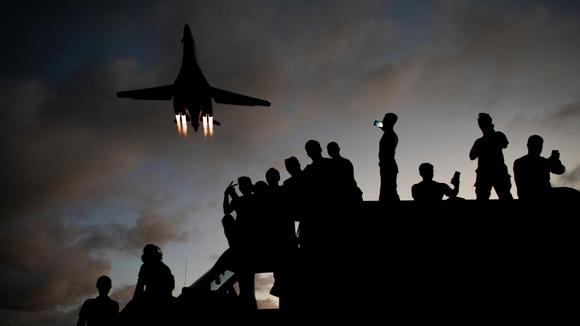
 Photo by River Bruce/U.S. Air Force | | |
|
|
From the Director
|
|
|
I am honored to step into the role of director for RAND's Workforce, Development, and Health program, following Nelson Lim, whose vision and leadership brought this newsletter to life three years ago. I am grateful for his dedication to sharing actionable research with the Department of the Air Force (DAF), and I look forward to carrying this important work forward to support the DAF's most vital asset—its people. In this issue, I want to highlight new RAND research showing that cybersecurity is both a technical and human challenge. As this research underscores, it is essential for Air and Space Force leaders to prioritize human-centered strategies to protect national security assets. This issue also features a spotlight on sleep health, a topic of enduring importance for airmen and guardians, as recent reports of sleep deprivation indicate. Our guest columnist, Wendy Troxel—an internationally recognized expert on sleep and its impact on health, performance, and resilience—shares insights from her research on chronic sleep deprivation in military populations. I look forward to your feedback: WDHNewsletter@rand.org Sean Robson
Director, Workforce, Development, and Health (WDH) Program, RAND Project AIR FORCE (PAF) |
|
|
|
|
|
|
What our columnists are reading this month
|
|
|
|
|
|
|
PAF’s body of work suggests 3 elements lead to AI success in HR
|
|
|
Nelson Lim
Senior Social Scientist |
|
|
DoD leaders are pushing to accelerate the delivery and adoption of AI and cultivate a workforce able to lead the way. Human resource management is a logical place to integrate AI as a cornerstone of more effective talent management. Numerous Project AIR FORCE studies have explored how AI applications can assist human resource managers from development of an AI system that scores officer performance narratives to a decision-support system for promotion and education board processes. This body of work offers strategic recommendations for using AI tools. Importantly, it emphasizes these success factors: balance innovation with risk, keep humans in the loop, and use performance data to guide expansion. |
|
|
|
|
|
|
|
|
Miriam Matthews
Senior Behavioral and Social Scientist |
|
|
A RAND report on improving the transition from military to civilian life carries important implications for the Air Force. Inadequate transitions can lead to unemployment, mental health challenges, and housing instability. For the Air Force, this highlights the need for earlier, more structured, and family-inclusive transition planning and for expanding the use of resources like the Transition Assistance Program and SkillBridge, which connect eligible airmen with civilian job training. The report calls for evaluating transition programs and creating a centralized, vetted resource hub to improve accountability and effectiveness. Implementing these recommendations could reduce post-separation fallout, support force readiness, and reinforce the Air Force's commitment to long-term member success—boosting both recruitment and retention. |
|
|
|
|
|
|
|
|
Kirsten M. Keller
Senior Behavioral Scientist |
|
|
Civilian hiring processes for the 96th Test Wing offer valuable insights for DAF leaders struggling with workforce recruitment challenges, according to a recent RAND report. The report identifies critical barriers to efficient and timely hiring, such as frequently changing guidance and forms, coordination done over email, duplicative systems, limited visibility into hiring status, and insufficient guidance for hiring managers. The authors developed targeted recommendations for addressing these challenges and streamlining the process, including identifying opportunities for automation. |
|
|
|
|
|
|
|
|
|
|
Lisa Harrington
Senior Operations Researcher |
|
|
New RAND research confirms what many DAF senior leaders already suspect: With 60 percent of cyber breaches involving human factors, technical defenses alone are not enough to protect Air and Space Force operations. As the study identifies, military leaders grappling with cybersecurity challenges can control some people-centered risk factors—like managing cognitive workload during high-tempo operations, implementing targeted training programs, and developing policies that account for the unique pressures facing military personnel. Most critically for Air Force and Space Force operations, personnel with privileged access to classified systems face elevated targeting from sophisticated adversaries, making human-centered cybersecurity strategies not just helpful, but mission-essential for protecting national security assets. |
|
|
|
|
|
|
|
|
Mark Toukan
Political Scientist |
|
|
The Space Force is transforming its approach to training guardians for operations in contested space environments. According to a recent RAND report, the Space Force needs to tailor its requirements and acquisition processes to reflect the service's unique characteristics, like its small size and the central importance of software to its weapons systems. Practical ways to enhance training include common standards for USSF training systems, environments, and threat models and improved communication across organizational silos. Recommendations to clarify governance roles, enhance coordination among stakeholders, and empower the Program Executive Office for Operational Test and Training Infrastructure to lead integration efforts will help the Space Force build a training and testing system that prepares guardians for peer conflict. |
|
|
|
|
|
|
|
|
|
|
Maria Lytell
Senior Behavioral Scientist |
|
|
The Department of Defense (DoD) wants to improve the health readiness of the force. One step in that direction is the recently announced plans to reduce the types of medical and health conditions that can receive waivers to enter the military. Improving the way DoD conducts health readiness assessments, which are required by Congress, could also help achieve that goal. RAND researchers evaluated these assessments and found redundancies and processes plagued by technology limitations—reducing the usefulness and efficiency of the assessments. The authors recommend using a set of criteria to remove redundant questions or add new ones to fill gaps, conducting a cost and benefit analysis of the different assessments, and exploring technological improvements to improve process efficiency. |
|
|
|
|
GUEST PERSPECTIVE
|
|
|
Quality sleep improves individual performance and family resilience
|
|
|
Wendy Troxel
Senior Behavioral and Social Scientist |
|
|
My two decades of sleep research at RAND has demonstrated how chronic sleep deprivation threatens safety and mission effectiveness for Air Force personnel. RAND's 2015 Military Sleep Report found only 37 percent of service members achieve the recommended seven to eight hours of sleep each night—a finding that remains highly relevant to today's force. One-third report fatigue at least three times per week, and nearly half experience poor sleep quality. These deficits impair attention, judgment, and reaction time while increasing risks for physical and mental health problems—factors that can compromise safety and readiness. Our research also shows that spouses of service member face elevated risk of sleep disturbance. Prioritizing sleep health is essential, not just for individual performance but as a foundation of resilience for military families. |
|
|
|
|
|

