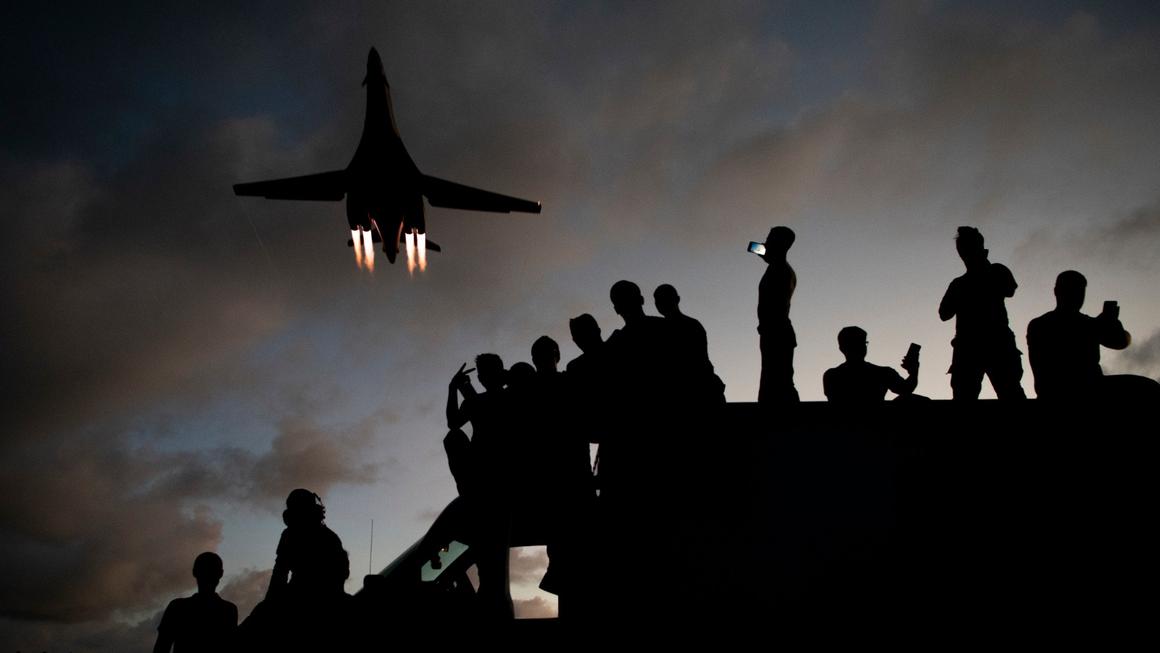
 Photo by River Bruce/U.S. Air Force | | |
|
|
From the Director
|
|
|
I'm pleased to share the latest issue of Results You Can Use, our quarterly newsletter highlighting RAND Project AIR FORCE research that helps the Department of the Air Force (DAF) strengthen and sustain its most important asset—its people. In this issue, we focus on the full spectrum of workforce challenges: how to identify future leaders, build and sustain critical technical skills, and ensure the health and readiness of the force. You'll find new tools for assessing promotion readiness, frameworks for managing special and incentive pays, and strategies for developing digital and cyber talent. We also look at how to better prepare medical personnel for the realities of wartime care. Each report offers practical insights to help the DAF build a more capable, resilient, and future-ready workforce. I look forward to your feedback: WDHNewsletter@rand.org Sean Robson
Director, Workforce, Development, and Health (WDH) Program, RAND Project AIR FORCE (PAF) |
|
|
|
|
|
|
What our columnists are reading this month
|
|
|
|
|
|
|
|
|
|
|
Nelson Lim
Senior Social Scientist |
|
|
RAND's Personnel Records Scoring System (PReSS) just got an upgrade. The initial proof of concept showed that this decision support capability can optimize talent management for field grade officers and senior enlisted personnel. The expanded version is an entire suite of tools that makes PReSS more accurate and adaptable. By synthesizing administrative data with unstructured text from performance reports, the updated architecture provides a rigorous, objective benchmark for assessing promotion readiness. This dual-data approach to predictive modeling offers leadership a scalable way to audit rater decisions and identify high-potential talent. The authors recommend operationalizing PReSS on the Envision platform to support more efficient, data-driven workforce planning. |
|
|
|
|
|
|
|
|
Kirsten M. Keller
Senior Behavioral Scientist |
|
|
Dual and naturalized citizens can bring valuable skills, such as language and cultural knowledge, to national security work. However, as a recent RAND report explores, these citizens face many challenges in the federal personnel vetting process for national security positions. They often encounter confusion, misinformation, and inconsistent guidance about requirements for receiving a security clearance, particularly around citizenship status and foreign connections. These barriers can discourage qualified candidates and limit the government's access to critical skills. The authors recommend updating policies, guidance, and forms for clarity and developing resources that better summarize and clarify requirements for these applicants. |
|
|
|
|
|
|
|
|
Maria Lytell
Senior Behavioral Scientist |
|
|
The Department of the Air Force (DAF) lacks a comprehensive strategy to manage special and incentive (S&I) pays, such as bonuses that help attract, retain, and motivate personnel in critical or demanding roles. To address this gap, RAND developed a strategic framework for effectively managing S&I pays. To apply the framework, DAF should develop an implementation plan and invest in data and analytics to support decisionmaking. If implemented successfully, the framework can promote data-driven, coordinated decisions that align S&I pays with DAF talent-management and compensation goals, strengthening the DAF's ability to meet evolving workforce needs. |
|
|
|
|
|
|
|
|
|
|
Lisa Harrington
Senior Operations Researcher |
|
|
A new report shows that the Space Force's ability to outpace competitors may hinge on building a digitally fluent workforce. RAND finds that the service's modeling and simulation gaps stem not only from tools and data shortfalls but also from limited capacity and uneven digital engineering skills. The authors call for a force development approach that grows digital talent, empowers cross-organizational collaboration, and embeds a culture of data sharing and continuous learning. Practical steps include expanding training in digital engineering and modeling tools, creating rotational assignments to build cross-mission expertise, and developing shared digital environments for collaboration. |
|
|
|
|
|
|
|
|
Mark Toukan
Political Scientist |
|
|
The Department of War faces persistent shortfalls in cyber readiness that cannot be resolved by simply trying harder under existing approaches. A RAND publication traces the challenges to six underlying conditions that span governance, capability development, and training pipelines and infrastructure. To address these gaps, the authors propose foundational lines of effort: consolidate and standardize training pipelines, invest in modern training infrastructure, centralize training and career management, link training to operational employment, and develop consistent measures of operational effectiveness. Implementing these solutions could improve cyber workforce readiness while informing future decisions on whether to pursue a centralized training and career management model or establish a dedicated cyber service. |
|
|
|
|
|
|
|
|
|
|
Miriam Matthews
Senior Behavioral and Social Scientist |
|
|
The U.S. Air Force Medical Service has a readiness challenge: routine low-acuity work dominates in peacetime, yet providers must still be ready to deliver high-stakes trauma care in contested environments. A RAND report found that a combination of declining deployment opportunities, unclear clinical-readiness requirements, fragmented oversight, and skill decay undermine preparation. To address the identified gaps, the DAF needs to standardize readiness metrics, align personnel assignments with trauma-relevant practice, bridge the gap between training and actual tasks, and build a deliberate "practice-portfolio" combining simulation, clinical practice, and team-based readiness. The aim is simple but urgent: Ensure that when the fight arrives, medics can turn training into survival for those who need it most. |
|
|
|
|
|

