Russian Arms Sales and Sanctions Compliance

Prepared by the RAND Corporation

Monthly Snapshot

January 2020

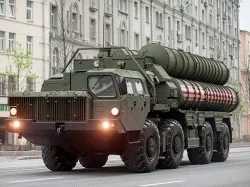
A Russian S-400 weapon system on display in Moscow. Photo by Dmitriy Fomin/Flickr (CC by 2.0)

This Monthly Snapshot captures a selection of the most salient open source material on Russian arms sales and information related to Countering America's Adversaries Through Sanctions Act (CAATSA) Section 231 sanctions during December 2020. The RAND Corporation gathers this open source material as part of a project for the U.S. Department of State to monitor activities related to CAATSA Section 231.

Selection: Open source materials are selected for the Monthly Snapshot based on analyst judgement to illustrate the diversity of sources, regions, and weapons systems

Jump to topic:

Measures Impacting CAATSA and Other Sanctions Measures

Russian Defense and Intelligence Sectors

Russian Military Systems Export Marketing and Sales

Russian Weapon Systems Operating in the Field

Measures Impacting CAATSA and Other Sanctions Measures

Russia to Replace French Engine in Ka-226T Helicopters with Locally-made Powerplant

December 30, 2020 | Defense World

Russia is replacing French-made engines for the Ka-226T with a Russian-made component, since Russia has not been able to acquire the engines due to sanctions. The engine, the VK-650V, is being developed by "V.V. Chernysheva, UEC-UMPO, Salyut Production Complex and KEMZ, which are part of Rostec State Corporation."

Why There's No Easy Solution to the U.S.-Turkey Dispute over the S-400

December 29, 2020 | World Politics Review

This article about the aftermath of sanctions on Turkey states "there appears to be no off-ramp to a dispute that is doing untold damage to Turkey’s relations with the U.S. and other NATO allies, as well as to the Turkish leadership’s pride and to the Turkish military." Erdogan had reportedly asked the United States for both technology transfer and co-production for the Patriot systems, which he claimed the United States refused. In discussing possible solutions to the apparent impasse, the author claims that Turkey could choose to not include the radar in the system. The author also notes that Turkey is "unlikely to return the S-400 system to Russia or ship it to another country, such as its close ally, Azerbaijan, as Moscow would only agree to such a move with steep concessions from Ankara."

Military Modernisation: S-400 Deal Must Go Ahead Despite Third-party Objections

December 22, 2020 | Times of India

This editorial in the Times of India says that India should remain firm on its acquisition of the S-400 in the face of possible U.S. sanctions. India claims that it only recognizes sanctions from the United Nations. The author says that "India needs this system to shore up its defence capabilities in the face of a belligerent China."

Turkey Stated that U.S. Sanctions Will Not Affect the Agreement on the S-400 SAM System with Russia (В Турции заявили, что санкции США не повлияют на соглашение по ЗРС С-400 с Россией)

December 17, 2020 | TsAMTO

According to the head of the Presidency of Defense Industries, Ismail Demir, U.S. sanctions will not affect the agreement between Russia and Turkey for the delivery of S-400 systems and will not cause damage to Ankara. The U.S. State Department applied CAATSA sanctions against Turkey over its purchase of S-400 SAM systems from Russia.

World Welcomes U.S. Sanctions on Turkey, But Should India Be Worried?

December 16, 2020 | Daiji World

This article, republished from Indian newswire IANS, explores the potential impact for India of U.S. sanctions against Turkey in response to its purchase of the S-400 system. The U.S. sanctions may be a cause for concern for the Indian government as New Delhi signed an agreement worth $5.4 billion for the purchase of S-400 SAM systems from Russia. The delivery of the first system from Russia is expected in less than 12 months. Furthermore, India has signed several agreements for the licensed production of Russian systems in India under the Make in India program, including agreements for the assembly of Su-30 fighters, T-90 tanks, BMP-2 armored personnel carriers, and helicopters.

How U.S. Sanctions Will Affect Turkey's Defense Industry

December 15, 2020 | Middle East Eye

This article explains that while the U.S. sanctions against Turkey's Presidency for Defence Industries (SSB) will not affect export licenses that are already issued, the sanctions "could still have an impact on up to $2bn worth of annual contracts signed by SSB." The sanctions could also create challenges for significant Turkish defense production projects "such as Istanbul-class frigates, Hurjet training and light combat aircraft and Turkey’s fifth-generation fighter jet TFX."

PAF's Difficulties Grow as It's Frontline Fighter JF-17 Faces Worsening Maintenance Issues

December 01, 2020 | Times Now News

Pakistan faces significant maintenance problems with its JF-17 fighter, which was jointly developed with China. As the article explains, "only Rosoboronexport can ensure overhauling and provide new engines or spare parts" for the Russian-made engine. Due to sanctions against Rosoboronexport, payment issues are leading to readiness concerns in Pakistan's Air Force.

Russian Defense and Intelligence Sectors

Ministry of Defense of the Russian Federation Announced the Postponement of a Number of Arms Exports due to Coronavirus (Минобороны РФ сообщило о переносе ряда экспортных поставок оружия из-за коронавируса)

December 27, 2020 | Interfax

According to Aleksandr Fomin, the Deputy Minister of Defense, Russia has delayed arms exports to a number of foreign purchasers due to the coronavirus pandemic. These delays are due in part due to restrictions on the admission of foreign specialists to train on systems in Russia. Furthermore, the number of international flights from Russia has been restricted, causing an increase in delivery time of arms to foreign countries and a decrease in the number of systems arriving in Russia for repair and maintenance. Russia has also experienced delays in payment for arms exports. Fomin stated that Russia's main arms export partners, including Algeria, Egypt, India, and China, have been negatively affected by the pandemic. This will most likely lead to a 4 percent decrease in the level of global arms sales.

The First Su-57s With a Second Stage Engine Will be Assembled in 2022

December 12, 2020 | Air & Cosmos International

Sergei Chemezov, general director of Rostec, stated that he hopes the second-generation engine for the Su-57 aircraft "will be manufactured and mounted on [the] aircraft" by 2022, to allow for serial production to "begin in the next few years."

U.S., Afghan Soldiers Lives at Risk as Ukraine Overhauls Mi-17V-5 Helos: Russian Helicopters

December 08, 2020 | Defense World

Russia has denounced unauthorized Ukrainian repairs of Afghan Mi-17 helicopters and warned about dangers to American and Afghan soldiers, "According to information received about the arrival of two Mi-17V-5 helicopters of the Afghan Air Force at the Ukrainian aircraft repair enterprises «Motor Sich» (Zaporozhye) and «Aviakon» (Konotop) for performing illegitimate overhaul, Russian Helicopters Holding Company disclaims all responsibility for further safe operation of mentioned helicopters and has every reason to deny services related to maintenance of these helicopters."

Global Arms Industry: Sales by the Top 25 Companies Up 8.5 Percent; Big Players Active in Global South

December 07, 2020 | Stockholm International Peace Research Institute

According to recent data by the Stockholm International Peace Research Institute (SIPRI), the revenues of three Russian companies in the world's top 25 largest arms producing and service companies decreased between 2018 and 2019. According to SIPRI, the revenues of Almaz-Antey and United Shipbuilding decreased "by a combined total of $634 million." The third company, "United Aircraft, lost $1.3 billion in sales and dropped out of the top 25 in 2019."

Russian Military Systems Export Marketing and Sales

Indonesia, France Reportedly Close on Rafale Fighter Deal

December 07, 2020 | Asia Times

According to French Minister of Defense Florence Parly, Indonesia is in advanced talks with France for the potential purchase of French Rafale jets. Reports indicate that Indonesia is seeking either 48 or 36 jets, which comes after previously expressed interest in Austria's Typhoon and Russian Su-35s.

Russian Weapon Systems Operating in the Field

Armenia Decided to Blame Russian Weapons (В Армении решили обидеться на российское оружие)

December 03, 2020 | Vzglyad

Armenia has placed part of the blame for its defeat in the Nagorno-Karabakh conflict on its strategy to purchase Russian weapons. Russian air defense systems, electronic warfare systems, and fighter jets have been criticized by Armenian officials. In particular, Russian air defense and electronic warfare systems performed poorly against Turkish-made drones; as a result, Armenia has indicated that it will abandon further use and purchase of these Russian systems. Furthermore, the purchase of new Su-30SM fighters from Russia has been questioned as these fighters did not complete a single sortie during the conflict. Critics believe that the money spent on these systems could have been used to purchase systems that would have better defended Nagorno-Karabakh. However, these statements can been seen in part as a way for Armenian military officials to shift blame for the loss of the conflict from their leadership to a third party. Armenia did not correctly implement the Russian air defense and electronic warfare systems due to poor leadership and training by the Armenian military, which decreased the effectiveness of these systems. Furthermore, Armenia did not have any Russian military advisors or specialists in Armenia who would have been able to maintain the equipment or train the Armenian forces on correct use.

Contacts

John V. Parachini

johnvp@rand.org

Senior International and Defense Researcher

Ryan Bauer

rbauer@rand.org

Defense Analyst

The RAND Corporation is a nonprofit institution that helps improve policy and decisionmaking through research and analysis.

This monthly snapshot is part of a U.S. government foreign assistance effort to help countries comply with U.S. and international sanctions associated with the purchase of Russian advanced conventional weapons.

Privacy statement | Manage your subscription

RAND Corporation

RAND Corporation. 1776 Main Street, Santa Monica, CA 90401-3208.
RAND® is a registered trademark.