A Newsletter from PAF's WDH Program
Results You Can Use
June 2025
|
 |
|
|
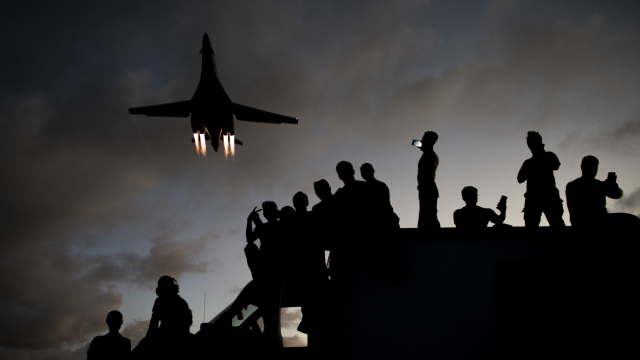
Photo by Senior Airman River Bruce/U.S. Air Force
|
From the Director
I am pleased to share the latest issue of Results You Can Use, a quarterly newsletter featuring research that enables the Department of the Air Force (DAF) to manage its most important asset: its workforce.
Perhaps the DAF’s most pressing workforce issue today is responding to calls for widespread workforce reductions to improve efficiency. As the DAF ponders the tradeoffs involved, prior RAND research offers some guidance.
One study specifically applied a war game methodology to evaluate the military personnel costs and tradeoffs of different policy options. Another report, about the ideal mix of civilian and officer faculty in the U.S. Air Force Academy, demonstrates that replacing civilians with their military peers does not result in cost savings, as civilian staff are generally less expensive. Both reports have the kinds of results and recommendations that can help senior leaders consider the tradeoffs of potential cost-cutting measures.
I look forward to your feedback: WDHNewsletter@rand.org
|
Nelson Lim
Director, Workforce, Development, and Health (WDH) Program, RAND Project AIR FORCE (PAF)
|
|
What our columnists are reading this month
|
|
TALENT MANAGEMENT
Sean Robson
Associate Director of the Workforce, Development, and Health Program
The Army and Air Force are taking significant steps to strengthen physical fitness standards and training approaches to meet the physical demands of modern warfare. The Army is addressing congressional directives to establish higher fitness standards for soldiers in close combat roles, focusing on improving readiness. RAND’s analysis provided the Army with a framework for evaluating options and strategies to support this transition. The Air Force is also emphasizing the importance of physical fitness, by revamping Basic Military Training to focus on combat-relevant physical tasks and experiential learning. These changes reflect both services’ dedication to fostering readiness, resilience, and a warrior ethos among their personnel.
Read the Report
|
|
SERVICE MEMBER AND FAMILY RESILIENCE
Miriam Matthews
Senior Behavioral and Social Scientist
Recognizing the unique challenges military-connected children face—such as frequent moves, family separations, and the inherent stresses of military life—is crucial for promoting force readiness, retention, and the overall health of the military community. A recent RAND report on the needs of military-connected children highlights several implications for the DAF. The report suggests a widespread need for student support in areas such as self-regulation, social and peer relationship difficulties, excessive screen time, and general mental health challenges. The report also found training and resources for parents to be one of the highest needs, with a high potential for impact.
Read the Report
|
|
SENIOR LEADER MANAGEMENT
Lisa Harrington
Senior Operations Researcher
The Department of Defense faces new requirements to reduce senior military leadership positions to enhance efficiency, innovation, and readiness. RAND has a long history of analyses aimed at senior leader management. Specifically, work to support congressionally mandated general and flag officer reductions in 2017 established a rigorous, adaptable, and transparent methodology for evaluating general and flag officer positions. This work revealed the need for consistent criteria to assess these senior leader requirements. Further, when positions must be eliminated, downgraded, or converted to civilian roles, systematic documentation of selection processes, implementation challenges, and long-term effects is essential. PAF could assist the DAF in the near term by developing performance metrics, creating evidence-based decision criteria, protecting critical leadership in domains like cyber and space, and addressing how interim measures might affect leadership development pipelines.
Read the Report
|
|
CIVILIAN WORKFORCE
Kirsten M. Keller
Senior Behavioral Scientist
As the DAF seeks to understand its civilian workforce requirements, a recent RAND report on the department’s civilian STEM talent can provide insight. The study finds that existing data systems are inadequate for accurately gauging demand and tracking the supply of skilled personnel. Gaps in technical talent arise from various sources, including reassignment of personnel between programs, unfunded positions, obstacles and delays within the civilian hiring system, and immediate needs that demand specialized expertise. Recommendations include enhancing skill identification at the local level, improving data collection, and developing a comprehensive competency framework to better align supply and demand for technical talent across the DAF civilian workforce.
Read the Report
|
|
WORKFORCE MANAGEMENT
Maria Lytell
Senior Behavioral Scientist
The U.S. Air Force (USAF) needs to ensure airmen have the right mix of skills to be ready for future conflicts. A recent RAND report identified skill gaps in five critical capability areas that need to be addressed—with multi-domain operational capability and adaptability being the most important. Key findings indicate a mismatch in training prioritization: resources are often allocated to low-risk tasks while high-risk areas remain undertrained. To enhance operational readiness, the USAF should consider adjusting training in career fields with clear skill gaps and determining training proficiency requirements. Tailored strategies for training will help the USAF develop Mission Ready Airmen for future conflicts.
Read the Report
|
|
TRAINING AND EDUCATION
Mark Toukan
Political Scientist
The DAF is reinstating its warrant officer (WO) program to help retain top-tier talent in technical fields. A new report examines the policies and practices of WO programs in the sister services to help inform this initiative. The report shows how these programs have evolved, with the Navy focusing on retaining senior enlisted talent and the Army on early career specialists, especially in aviation. As the DAF implements its own program, it will need to clearly define roles for WOs, align training with operational needs, and tailor the program to purpose, whether that is retaining experienced senior enlisted, attracting junior enlisted and civilians, or a hybrid. The Army and Navy demonstrate that both models can exist in the same service.
Read the Report
|
|
RAND is a nonprofit institution that helps improve policy and decisionmaking through research and analysis.
|
|
|
|
Privacy statement
|
 |
RAND. 1776 Main Street, Santa Monica, CA 90401-3208.
RAND® is a registered trademark.
|
|
|
|
|


