A Newsletter from PAF's WDH Program
Results You Can Use
May 2023
|
 |
|
|
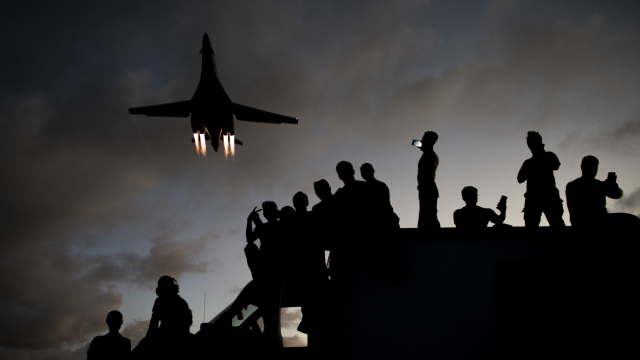
Photo by Senior Airman River Bruce/U.S. Air Force
|
From the Director
I am pleased to share the latest issue of Results You Can Use, a quarterly newsletter featuring research that enables the Department of the Air Force (DAF) to manage its most important asset: its workforce.
This month, I have been thinking about why sexual assault and sexual harassment are such intractable problems in our military institutions. The latest example is the DoD's 2021-2022 report about a spike in unwanted sexual contact and sexual harassment at the academies despite decades of prevention initiatives. Leaders ask why there is so little progress, and I can offer just two related explanations. The first is that the DoD earnestly initiates prevention programs but has little to no evidence that they are effective because it doesn't collect the data to evaluate them. The second is that programs are often implemented simultaneously, making evaluation virtually impossible because the outcomes are so entangled. DoD should take a page from medicine and treat program evaluation like a randomized controlled trial: test each prevention program on a treatment group and compare the outcomes to a control group. Until DoD can determine what works and what doesn't, unwanted sexual contact will continue to challenge the military academies and the services.
Read the DoD report at https://www.sapr.mil/reports
I look forward to your feedback: WDHNewsletter@rand.org
|
Nelson Lim
Director, Workforce, Development, and Health (WDH) Program, RAND Project AIR FORCE (PAF)
|
|
What our columnists are reading this month
|
|
HARMFUL INTERPERSONAL BEHAVIORS
Miriam Matthews
Associate director of the Workforce, Development, and Health program
One goal of the DoD Retaliation Prevention and Response Strategy is developing a culture that does not tolerate retaliation against sexual assault victims. Achieving this goal requires understanding when retaliation is most likely to occur. RAND researchers examined incident, victim, and perpetrator characteristics to understand when retaliation is a risk. RAND found that perceived retaliation was most likely to occur in sexual assaults related to hazing, and that even sexual assault victims who remain silent have perceived risk for social and professional retaliation.
Read the Report
|
|
TALENT MANAGEMENT
David Schulker
Senior Policy Researcher
The FY 2019 NDAA gave the services new flexibility to manage field-grade officers with the goal of retaining officers who had unconventional career paths (for example, a prior civilian job in technology). One change authorizes an alternate promotion authority (APA) that expands an officer's promotion window to five years rather than a single in-the-zone "look." To see how the APA might affect officer inventories, RAND tested the different policies in a simulation, and the findings were concerning. Most notably, there is no obvious mechanism to prevent selection boards from concentrating on the first look during the five-year promotion window and re-creating the in-the-zone promotion pattern that the NDAA sought to avoid. The RAND team recommends testing the APA on a single development category so the DAF can work out this and other implementation difficulties without risk to the entire enterprise.
Read the Report
|
|
SCIENCE AND TECHNOLOGY WORKFORCE
Lisa Harrington
Senior Operations Researcher
A recent RAND report found that DoD's readiness-reporting systems are not designed to meet the unique demands of the USSF and that a new framework is needed. A major issue is that current reporting systems were built with full-time deployment in mind. But most USSF missions are conducted from the home station, and personnel work in shifts, which current reporting systems do not track. Another challenge is that readiness reporting is spread across services, reserve and guard personnel, civilians, and contractors when it should take a total force perspective and be aligned to organization and mission. Because of the autonomy of space systems and since operators do not travel with their satellites, the traditional geographic or personnel-based construct for force presentation is not suited for space systems. The authors recommend a more appropriate readiness framework for the USSF.
Read the Report
|
|
CIVILIAN WORKFORCE
Kirsten M. Keller
Senior Behavioral Scientist
Last month, the Government Accountability Office joined a long list of agencies worried about the services retaining cybersecurity personnel. For insight, we can turn to PAF research that asked enlisted and civilian cyber personnel for their thoughts. Focus groups voiced concerns over the Air Force's ability to attract the right people, especially given its protracted onboarding process. They also believed the "best-quality" people are leaving the Air Force, either drawn by better-paying cyber jobs in the private sector or frustrated with promotions that pull them away from the technical work they enjoy. PAF offered several solutions, including shortening onboarding for civilians and creating senior cyber roles that aren't supervisory.
Read the Report
Read the related news item (PDF)
|
|
PERSONNEL SELECTION AND STANDARDS
Maria Lytell
Senior Behavioral Scientist
To address an ongoing recruiting crisis, the U.S. military services are relaxing policies on tattoos and offering courses to help recruits meet fitness and academic standards. Prior RAND research may offer some useful insights: A study for the Army found that enlistment waivers didn’t seem to result in worse career outcomes for those recruits. But a second study for the Air Force found that airmen who are seen as overweight might face some stigma for not meeting the medical standards. The PAF report recommends that the Air Force carefully communicate changes to entry fitness standards to overcome any cultural barriers.
Read the Air Force Report
Read the Army Report
|
|
TRAINING AND EDUCATION
Mark Toukan
Political Scientist
The Air Force uses a combination of live, virtual, and constructive (LVC) capabilities to deliver complex training to aircrews. A persistent challenge has been how to identify the right set of training capabilities and right mix of live and simulated training for task proficiency. PAF created a framework and a prototype software tool that map training needs to different LVC training capabilities to understand which technologies would work best for which training exercises. Because selecting training technologies depends on many factors besides skills requirements, the authors developed a logic model that illustrates how policy, training goals, and resources influence which technologies are feasible to use for training.
Read the Report
|
|
The RAND Corporation is a nonprofit institution that helps improve policy and decisionmaking through research and analysis.
|
|
|
|
Privacy statement
|
 |
RAND Corporation. 1776 Main Street, Santa Monica, CA 90401-3208.
RAND® is a registered trademark.
|
|
|
|
|


