A Newsletter from PAF's WDH Program
Results You Can Use
June 2024
|
 |
|
|
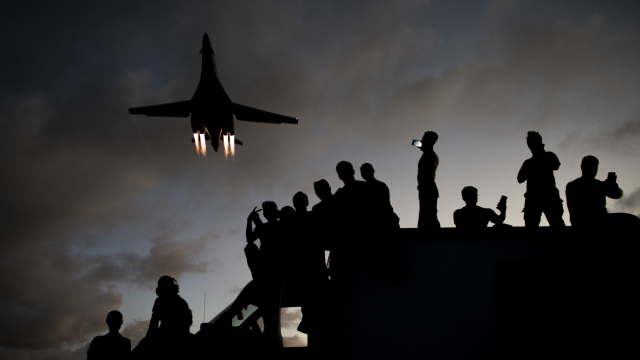
Photo by Senior Airman River Bruce/U.S. Air Force
|
From the Director
I am pleased to share the latest issue of Results You Can Use, a quarterly newsletter featuring research that enables the Department of the Air Force (DAF) to manage its most important asset: its workforce.
As the U.S. Air Force and U.S. Space Force (USSF) gear up for potential conflict with near-peer adversaries like China and Russia, airmen and guardians must be equipped with the necessary skills and competencies to excel in a high-end fight. Secretary of the Air Force Frank Kendall underscored the urgency of this mission when he stated that "We are out of time... We are engaged in an enduring competition that could escalate to conflict at any moment."
To upskill its personnel to meet these challenges, the DAF should consider adopting stackable certifications to expand workforce skills. These certifications allow individuals to accumulate shorter-term, industry-recognized credentials that can be combined to earn higher-level degrees or certifications over time. This approach offers the much-needed flexibility, adaptability, and alignment with DAF needs, enabling airmen and guardians to acquire new skills at their own pace while ensuring that the skills acquired directly apply to the needs of great power competition.
To get the most out of its investment in specific skills, individuals need to be assigned to positions where their skills are needed. A RAND PAF study revealed a mismatch between officers with advanced degrees and billets requiring those degrees. It offers a methodology the Air Force can use to improve its personnel alignment with job requirements.
I look forward to your feedback: WDHNewsletter@rand.org
|
Nelson Lim
Director, Workforce, Development, and Health (WDH) Program, RAND Project AIR FORCE (PAF)
|
|
What our columnists are reading this month
|
|
TALENT MANAGEMENT
Sean Robson
Associate Director of the Workforce, Development, and Health Program
Artificial intelligence (AI) is becoming more important for national security, but the biggest investments in AI are coming not from the U.S. Department of Defense (DoD) but from big U.S. technology companies. This is new territory for DoD, which has long been the main center for technological advances. Tech companies now hold the major talent, and their organizational cultures and values may differ in ways that limit DoD's ability to fully leverage emerging AI capabilities. Recent RAND research explores cultural similarities and differences between DoD and these technology companies. By identifying and focusing on shared values, the DoD can strengthen its relationships with tech companies—a key factor for attracting and retaining AI talent.
Read the Report
|
|
HARMFUL INTERPERSONAL BEHAVIORS
Miriam Matthews
Senior Behavioral and Social Scientist
Racial disparities in the military justice system have existed for decades, but the factors causing these disparities are not well-known. To address this gap in knowledge, RAND research explored how racial disparities might arise in the military justice system and the extent to which career fields and offending rates might explain some of these differences. Drawing from interviews, policy reviews, personnel data, and discipline data, this research found that lower-ranking Black enlisted airmen were substantially more likely to be issued an Article 15 and court-martialed than their White counterparts. Although one-fifth of this disparity between Black and White airmen can be explained by career fields and offending rates, four-fifths is unexplained, suggesting a need for evidence-based reforms.
Read the Report
|
|
SCIENCE AND TECHNOLOGY WORKFORCE
Lisa Harrington
Senior Operations Researcher
Since its inception in 2019, the USSF has largely mirrored the U.S. Air Force's human capital management (HCM) policies and procedures. Today the USSF stands at the threshold of pioneering military HCM by embracing cutting-edge talent management strategies. Senior leaders recognize the critical nature of effective HCM and are well-versed in the successes and areas needing enhancement. Recent RAND research identified areas where improvements are essential: personnel policies, force development, macro force design, interservice transfers, and resourcing HCM functions. As the USSF continues to refine its units' alignment, structure, and makeup, integrating these changes will be crucial for shaping future personnel strategies.
Read the Report
|
|
CIVILIAN WORKFORCE
Kirsten M. Keller
Senior Behavioral Scientist
Civilians make up a large component of USSF personnel. As the USSF continues to develop its approach to talent management, it will be important to clearly define how it intends to use civilians compared to military members. A recent RAND report explores how the USSF is currently differentiating between military and civilian roles and provides recommendations for how this might change in the future. The authors recommend that the USSF provide better clarity of and rationale behind the different roles assigned to civilians, officer, and enlisted members. They provide a rubric that contains a menu of options the USSF can consider in balancing competing considerations for the use of personnel.
Read the Report
|
|
WORKFORCE MANAGEMENT
Maria Lytell
Senior Behavioral Scientist
In its key decisions on "reoptimizing for Great Power Competition," DAF leaders introduced plans to establish technical tracks and a Warrant Officer corps to manage and develop careers of airmen with advanced technical skills. Three recommendations from a June 2023 workshop with DAF personnel, which was detailed in a recent RAND report, are that DAF leaders need to ensure that career fields are large enough to sustain both technical and institutional career tracks; that incentives are flexible to address different career field needs; and that technical tracks have clear objectives and expectations.
Read the Report
|
|
TRAINING AND EDUCATION
Mark Toukan
Political Scientist
The DAF stands to benefit from advances in training technologies, but the vast array of available options makes it difficult to identify which are most relevant and ought to be prioritized for investment. A recently published RAND report surveys the technology landscape using a quantitative modeling approach based on hundreds of thousands of documents that reflect research and development within the DAF, the DoD, commercial industry, academia, and by allies and adversaries. The report provides stakeholder perspectives on developmental priorities and includes an expert panel's analysis of the maturity, benefits, applicability, and adoption barriers for a subset of technologies to help the DAF identify and invest in particularly promising training technologies.
Read the Report
|
|
RAND is a nonprofit institution that helps improve policy and decisionmaking through research and analysis.
|
|
|
|
Privacy statement
|
 |
RAND. 1776 Main Street, Santa Monica, CA 90401-3208.
RAND® is a registered trademark.
|
|
|
|
|


