A Newsletter from PAF's WDH Program
Results You Can Use
October 2024
|
 |
|
|
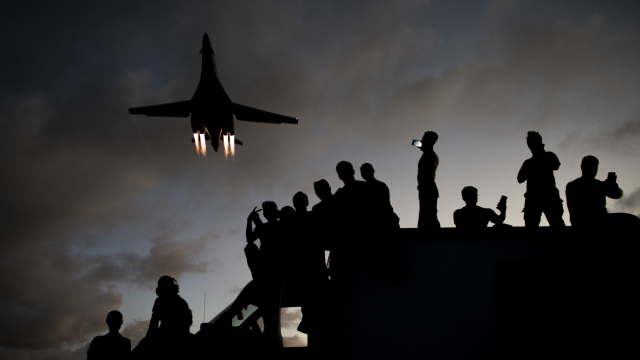
Photo by Senior Airman River Bruce/U.S. Air Force
|
From the Director
I am pleased to share the latest issue of Results You Can Use, a quarterly newsletter featuring research that enables the Department of the Air Force (DAF) to manage its most important asset: its workforce.
This quarter I am excited to feature a new report: Leading with AI: Insights for U.S. Civilian and Military Leaders on Strengthening the Domestic AI Workforce and Talent Pipeline. Artificial intelligence is poised to significantly affect the military and civilian workforce through job displacement, augmentation, and the growing need for widespread upskilling. In response to President Biden's 2023 executive order on AI, agencies in the Department of Defense (DoD) and other federal departments are publishing AI guidance documents, and Congress is examining the impact of AI advancements on the workforce.
To inform this effort, RAND has published a collection of short essays providing overviews of technical and organizational challenges and actionable insights to help organizations effectively integrate AI and equip their personnel with the necessary skills. As AI becomes increasingly embedded in the workplace, the knowledge and recommendations within this report will be vital for maintaining the competitive edge of the Department of the Air Force (DAF) and other federal agencies.
I look forward to your feedback: WDHNewsletter@rand.org
|
Nelson Lim
Director, Workforce, Development, and Health (WDH) Program, RAND Project AIR FORCE (PAF)
|
|
What our columnists are reading this month
|
|
TALENT MANAGEMENT
Sean Robson
Associate Director of the Workforce, Development, and Health Program
U.S. Air Force Special Warfare (AFSPECWAR) is a physically and mentally demanding career field that requires tailored strategies to attract candidates. A recent PAF report suggests that recruiting for these specialties may be an uphill battle, given that 82% of the public is unfamiliar with AFSPECWAR. The authors recommend several strategies to strengthen recruiting efforts, including defining roles within the recruiting enterprise, expanding recruitment from within the Air Force, and emphasizing AFSPECWAR attributes. These recommendations will help attract qualified candidates, improve operational readiness, and provide a foundation for recruiting efforts in other specialized career fields.
Read the Report
|
|
HARMFUL INTERPERSONAL BEHAVIORS
Miriam Matthews
Senior Behavioral and Social Scientist
To better prevent domestic abuse, prohibited discrimination, and other harmful behaviors, the DAF needs accurate, up-to-date data on the prevalence of these behaviors and their associated risk and protective factors. Toward this end, the DAF could draw on a recent RAND report for the U.S. Army that identifies several relevant data sources that are maintained by the DoD. The report warns, however, that collecting and maintaining these data can be difficult, and steps need to be taken to mitigate problems associated with changing measures and methods, lack of knowledge about and access to data sources, and collection of information on a limited number of risk and protective factors.
Read the Report
|
|
SCIENCE AND TECHNOLOGY WORKFORCE
Lisa Harrington
Senior Operations Researcher
The USSF's unique mission requires a highly skilled, technical workforce that differs from those of the other services. A recently published PAF report sets the stage for this transformation: It provides a strategic framework to align the advanced academic degrees (AADs) of the USSF workforce with the job competencies required, emphasizing a targeted approach to ensuring guardians have the right mix of skills to meet future mission needs. Key recommendations include refining the purposes for funding AADs, incentivizing self-funded degrees, and exploring policy changes for optimal management of guardians with degrees.
Read the Report
|
|
CIVILIAN WORKFORCE
Kirsten M. Keller
Senior Behavioral Scientist
Over the past decade, RAND has conducted a variety of research studies for the DAF and other services on civilian workforce issues. Now the best of these studies are available in one place: A new PAF publication highlights RAND research on a host of topics including workforce requirements, civilian talent management, recruiting and hiring, effective training and development, advancement and retention, and compensation and benefits. Although the studies come from across the military services, their insights and recommendations may be valuable to the DAF and its own civilian workforce efforts.
Read the Report
|
|
TRAINING AND EDUCATION
Mark Toukan
Political Scientist
The DAF stands to benefit from developments in advanced training and learning technologies, but transitioning to these technologies in the first place is the hard part. To improve the transfer of these technologies to the force, a recent RAND report provides a framework showing the steps in the technology transfer process. The framework can be used at the enterprise, organizational, or tactical level to help the DAF overcome common barriers and ensure enablers are in place at each stage of the transition process. Addressing major barriers in the near term is a requirement for the DAF to transform its training and learning enterprise in the long run.
Read the Report
|
|
RAND is a nonprofit institution that helps improve policy and decisionmaking through research and analysis.
|
|
|
|
Privacy statement
|
 |
RAND. 1776 Main Street, Santa Monica, CA 90401-3208.
RAND® is a registered trademark.
|
|
|
|
|


